Tag: Sidewalks

  • Public Safety and the Vibrant Uptown Project

    Public Safety and the Vibrant Uptown Project

    Last Monday, after the police chief community forum, Commissioner Ranney informed me of a conversation she had with an uptown business owner in which she was asked whether she was aware that a person had fallen on an uptown sidewalk who then later died. Commissioner Ranney had not been aware, nor was I.

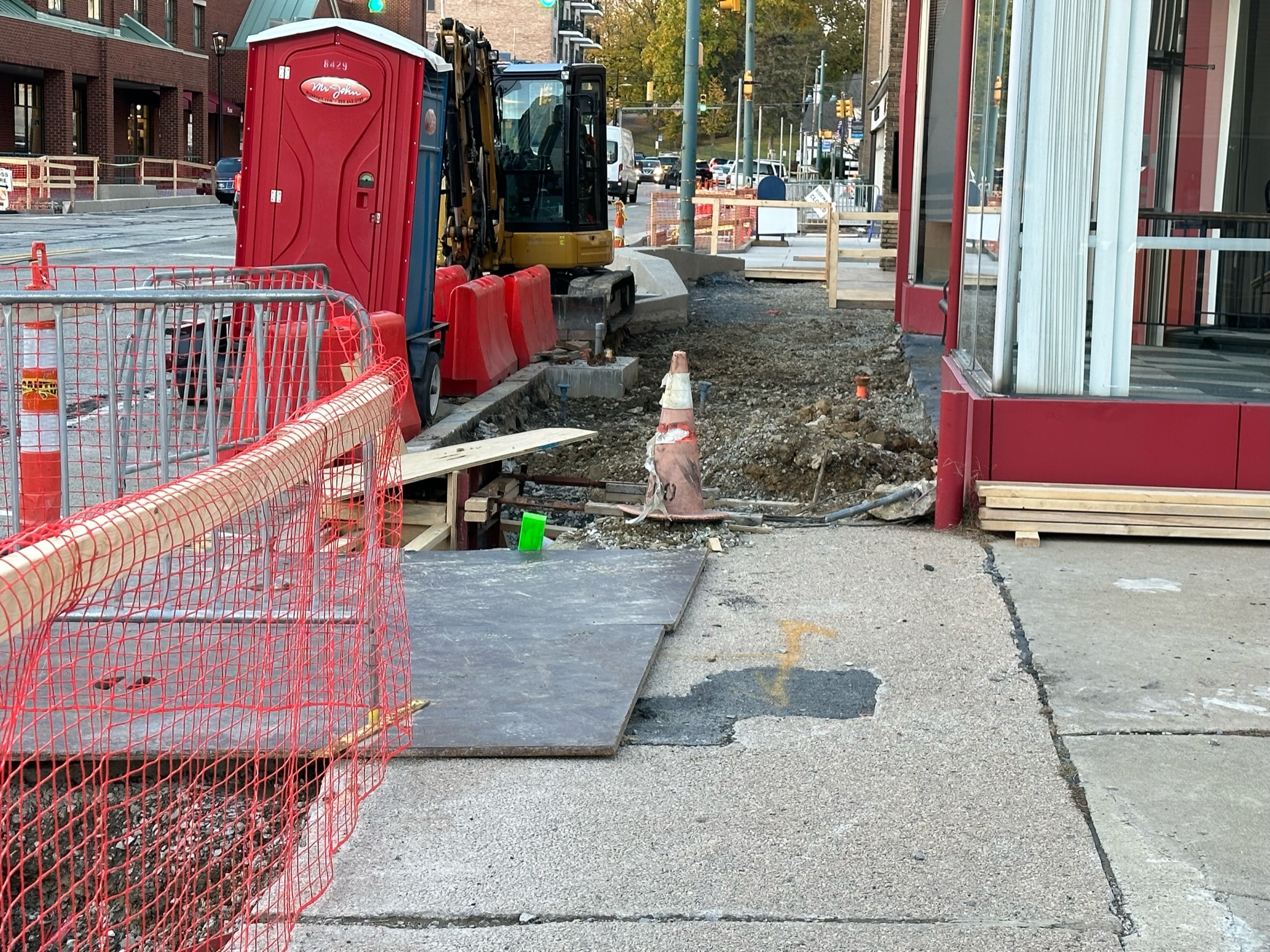
    I was not aware, but it didn’t surprise me. The picture above was taken uptown just a few days ago – that is not a stock image. It’s one of the reasons I have sent several emails over the course of several months to our manager, solicitor, commission, and other staff members about my concerns with the vibrant uptown project. I voiced those same concerns at many meetings we’ve had since the project started. To date, those concerns have seemingly been ignored, which is why you are reading about it here.

    Following that conversation with Commissioner Ranney, I sent an email to the municipal manager, municipal solicitor, and the rest of the commission asking for more information about the person who fell and trying to understand why that information had been kept from the commission. To date, those questions have not been answered. Not by the manager, the solicitor, or other members of the commission whom might have known about this incident and kept it secret.

    At the last Commission meeting, it was announced the Pumpkin Patch Parade would continue as regularly scheduled. For those unfamiliar with the route of that parade – it normally starts at the cemetery and continues south on Washington through uptown ending at Mellon Middle School.

    On Wednesday, I took some photos of Washington Road where hundreds (and possibly thousands) of our family members would be standing during a parade. They’re included the link below:

    https://www.icloud.com/sharedalbum/#B0o5nhQSTdRkbP;22627329-D4BF-4702-BD23-64BF49FB64B5

    Since then, I have pleaded with the other commissioners and staff to move the parade away from uptown, or to hold “trunk or treating” in an alternate location; a suggestion our State Representative also made, and smartly so, in my opinion.

    I’ve gone to every Pumpkin Patch Parade we’ve held since moving to Mt Lebanon more than 10 years ago. For several of the last events, I was the person dressed up as McGruff the Crime Dogg giving out high-fives throughout the parade route. It’s an important and fun event for our families and my kids absolutely love it.

    I am not an alarmist. I think those who know me would consider me a reasonable person who searches for practical solutions to the issues we face. No one wants to be the person to cancel such a fun event for the community, but that’s what responsible people do – when they see something amiss they call attention to it. To do otherwise, or to conceal information from elected officials charged with making important decisions about the safety of our community is irresponsible and lacks sound judgement.

    So much goes into this parade, not only from the municipal side of things, but also from the many organizations, nonprofits, and community groups that are making plans and spending money to be in this parade. Waiting until the last minute to cancel this event makes it nearly impossible to execute an alternative, and it might even create a situation where those community groups can’t get refunds on expensive purchases they made for the event, including candy, costumes, floats, and other parade items.

    So, after seeing those images linked above, I have two questions:

    1. Can you get your kids to stand absolutely still during a parade and not play near elevation changes of several feet with nothing in their way but a single piece of yellow caution tape?
    2. While we do not know the root cause of that person’s death or whether it was even related to the fall uptown, why would the manager and other commission members refuse to answer questions about what they knew and when they knew it?

    If you’d like to know more about the questions I’m asking which are currently being withheld – text me at 412-444-8675.

    In the meantime, call your local commissioner and let them know what you think. You can find their contact information on the official Mt Lebanon website under the Meet Your Commissioners heading.

    Perhaps you will get answers to the questions above or others that you might have related to the Vibrant Uptown project and the parade.
  • New FNB Plans Approved by Commission

    New FNB Plans Approved by Commission

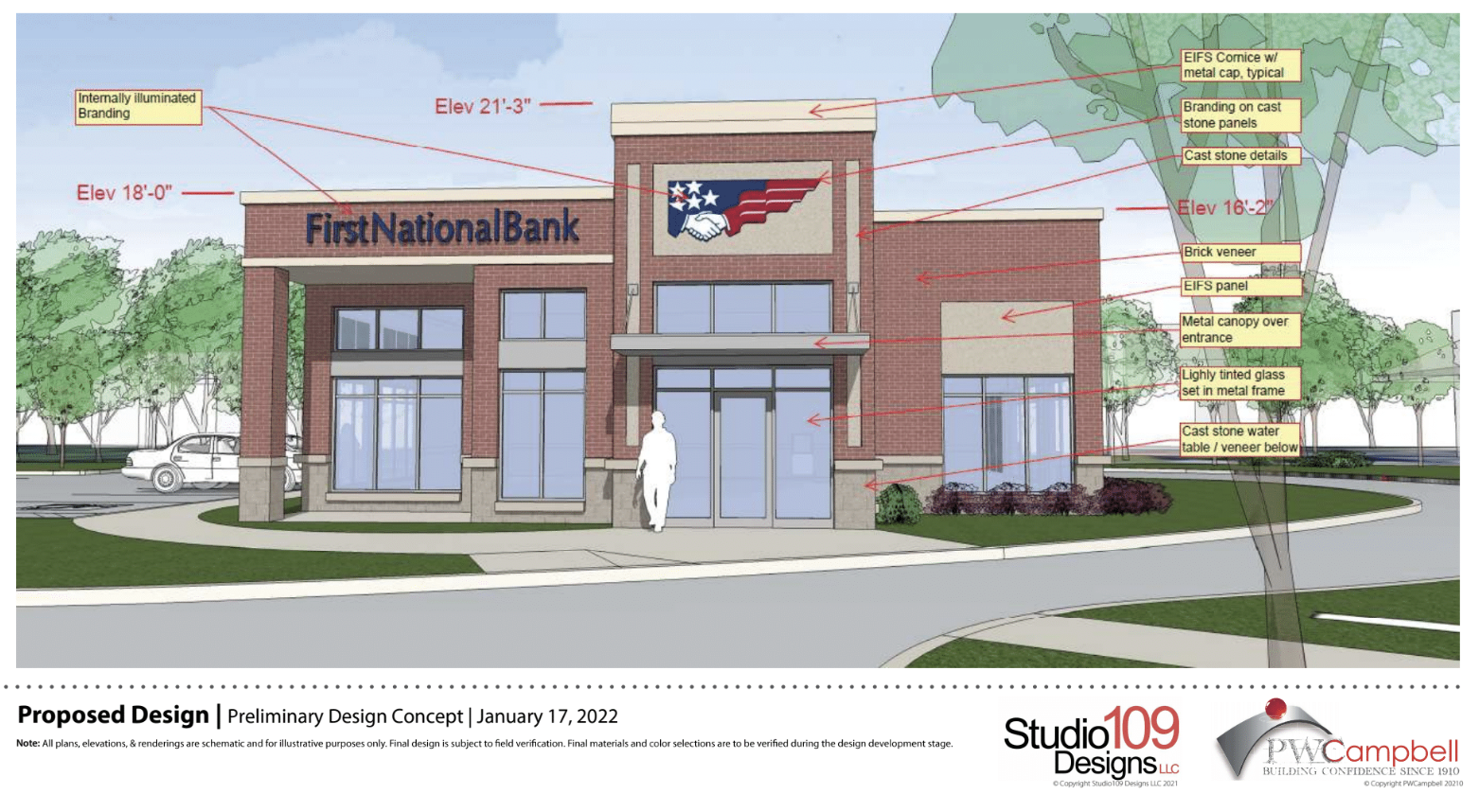
    Last Tuesday, the Mt Lebanon Commission approved the plans for the development of a new FNB Bank to be placed at the location of the existing (and empty) Dollar General store on Cochran Road. I thought it would be a good time to further discuss the development process, this time from the standpoint of our SALDO.

    What is the SALDO?

    SALDO stands for Subdivision and Land Development Ordinance, which are the rules and regulations that makeup how the land can be subdivided and developed within the municipality. The SALDO goes hand-in-hand with our Zoning code and building code, which, together make up all the rules and regulations that govern property development, redevelopment, land usage, and the rules on how buildings can be constructed.

    The Zoning code determines what TYPE of property can be developed or built in any specific area. For example, C-1 is a commercial zone that allows commercial buildings, office space, and other business types. R-1 is single-family residential. R-2 allows multifamily properties, but only of relatively low density. Inside each section of the zoning code, you will find information that further defines the rules and regulations of what can be done in any zone, like whether fences or pools might be allowed, the types of and widths of roads and driveways that are required, etc. The Zoning code is a very versatile document and usually the first stop for any property developer looking to build in Mt Lebanon.

    After a developer consults the Zoning code to see if a specific building type is possible on a particular parcel, they consult the SALDO which sets out design standards and gives developers further information about how that property can be developed and the procedure for turning in documents for the development. For example, the SALDO sets forth rules for Stormwater Conveyance and Management, Sanitary Sewers, Handicapped Accessibility, Landscaping and Screening Standards, Pervious Pavement, and other items. The SALDO sets construction hours between 7:00 am and 7:00 pm Monday through Saturday, all day Sunday and on federally designated holidays. It also sets the required turning radius for cul-de-sacs to allow for emergency vehicles to navigate them properly, and where sidewalks should be provided, if at all.

    The Development Process

    We discuss the overall real estate development process in depth in another article, but the general process goes like this:

    Present Plans to develop a property

    The Planning Commission reviews the submission to make sure that plan follows the zoning code and SALDO. If there are elements of the plan that do not fit the zoning code, the developer can appeal to the Zoning Hearing Board and ask for a variance. If there are elements of the plan that do not fit the SALDO they can ask for a waiver from the Commission.

    There are only 5 reasons to approve a variance, and since this is a quasi-judicial board, those 5 reasons are legal thresholds that must be met. This is the reason so few variances are granted. If the developer (or resident) doesn’t like the decision of the Zoning Hearing Board they can appeal that decision to the Court of Common Pleas in Allegheny County. There have been several appeals of our ZHB decisions in the past 6 years. None of them have succeeded at the county level.

    A developer can ask for a waiver from any of the requirements of the SALDO, and these are reviewed directly by the Commission. And this is where my story picks back up.

    SALDO WAIVERS

    Waivers are not usually requested for single-family developments or smaller commercial properties – because they can be easily developed within the rules of the SALDO. When developers attempt to fit too much on a lot, or save a few dollars on items we require but other neighborhoods don’t, the Commission might see more waiver requests. And that’s what happened with the FNB recently approved.

    Section 704 of the SALDO sets forth rules about sidewalks. Section 704.1 simply states:

    In all subdivisions and land developments, sidewalks shall be installed along the portions of the property abutting a street.

    Section 704.1. Mt Lebanon SALDO

    That means when someone proposes a new development or redevelops an existing property, if they abut a street (public, private, or otherwise designated) a sidewalk, if it does not already exist, must be installed.

    Being a “walking community” you can imagine why this portion of our SALDO is extremely important. Yet sidewalk requirements are not implemented consistently and their application has varied from commission to commission. That’s why we see some roads have them and some roads don’t.

    FNB Requests Sidewalk Waiver

    During the development process, the developers of the new proposed FNB requested a sidewalk waiver for the street abutting their property — the northern property boundary with Ferren Alley. The developers claimed, among other things, that the land coming off the alley was too shallow and too steep such that following the SALDO would cause the developer to expend additional funds to install a sidewalk. To install a sidewalk, they would have likely had to ease the slope coming off the alley, which in turn would have likely required ground fill and potentially a stabilizing wall.

    However, the SALDO does not allow for considerations related to expense, it merely sets forth best practices for building and development. And that’s the way it should be.

    The developer tried to further obfuscate the issue by offering to install extra screening trees to effectively block the view of the building from residents along the alley. In doing so, they shift the conversation from the Municipality requiring safe sidewalk access on all roads to a conversation about residents seeing beautiful trees instead of a monolithic building facade.

    In the end, the Commission voted 4-1 to approve the waiver and allow the development; with one dissenting vote from me. It was my opinion the developer should follow the SALDO and install the sidewalk, even on the abutting alley. Wanting to save a few dollars during development is not a reason to seek waivers from our SALDO.

    Why This Matters

    If you live on a private road, alley, or “paper” street that the municipality does not own, the maintenance of that road falls to the abutting property owners. The municipality may, from time to time, still plow that road in an effort to keep it clear for potential emergency vehicles, but doing so is not the municipality accepting responsibility for that road. Those roads, since they were not required to follow public road standards, seldom have curbs, seldom are made of concrete, and seldom have storm water management. The cheap asphalt gets eroded, mud from the lawn makes it way into the road and down the street, and ice spots often occur here in winter. This is why these roads often fall into disrepair. It’s also the reason for many of the road maintenance complaints we get as commissioners. And for good reason. These types of roads really shouldn’t exist. And even if many of them were created before we had rules governing road development (like we do now), the SALDO works to correct those former deficiencies by requiring new developments to bring the properties up to modern standards.

    Had the developers of the FNB followed the SALDO, they would have been forced to install sidewalks, which forces them to build curbs. Does it cost more to build? Yes, it does. But it brings our roads up to modern standards, provides more sidewalk space, allows for better stormwater flow, and makes our roads and neighborhoods moderately safer, and easier to navigate.

    Some would claim this road is just an alley and there isn’t much traffic and forcing a developer to build a sidewalk there on the back or side edge of a bank is superfluous. The SALDO doesn’t set forth rules for minimal traffic to be met before sidewalks should be installed. It doesn’t set forth rules for the type of street on which sidewalks should be installed. It doesn’t set forth property types that require or don’t require sidewalks. They all do.

    Official Documents

    Official information related to this development can be found on the publicly available municipal website. There, you’ll find building renderings, a development plan, and a timeline of official proceedings.

    Let Me Know Your Opinion

    Drop a comment here on the post and it will show up for others to read here and in the main site activity feed.