Category: Updates

  • Coffee with a Commissioner #1: Development in Mt Lebanon

    Coffee with a Commissioner #1: Development in Mt Lebanon

    Welcome to the first edition of Coffee with a Commissioner.

    My goal is for this to be a weekly series of live streams answering questions from members of the community. You can find more information about the series at https://openlebo.com/coffee-with-a-commissioner/ including links to the recordings and a link to add future events to your calendar.

    In this episode we cover the following topics that are based on the most frequently asked questions in the past few weeks:

    1. Real estate development
    2. Permits
    3. Working with contractors
    4. Construction updates
    5. Sports field study

    Remember, if you have questions you’d like answered in a future livestream send them in via the form at https://openlebo.com/question.

    Coffee with a Commissioner #1 was live-streamed to YouTube on friday August 23, 2024 at 12:00 pm eastern time. The video can be viewed in its entirety on YouTube or through the embed below:

    Let’s get started with the first topic: real estate development.

    Real Estate Development in Mt Lebanon

    To understand real estate development in Mt Lebanon it’s important to first understand the local regulations, property types, and the development process overall.

    Real estate development is bound by local, county, and state rules. These regulations are crucial to understand, as they decide the overall process that developers must follow when they develop new or modify existing property in Mt Lebanon. 

    It’s also important to understand the term “real estate development” applies to new, larger developments and not to simple remodels, which are covered in the permit section of this article. A developer wanting to create a new development of 10 homes would go through the real estate development process, whereas a homeowner seeking to remodel their bathroom would not – the latter would simply apply for permits.

    Property Types

    The types of property one can develop typically include industrial, commercial, and residential. 

    Industrial properties are typically large factories or manufacturing spaces. While we don’t have many of these in Mt Lebanon.

    Commercial property is a diverse category that includes retail stores, restaurants, bars, and service-based businesses like florists and custom framing shops. Office spaces, meanwhile, house professionals like doctors and lawyers, consultants, etc.

    Residential property includes single-family homes, apartments, townhouses, and condominiums. Residential properties can be considered commercial if they have five or more units. For example, a building with 50 apartment units is technically a commercial enterprise, even though its made up of residential living units.

    Now, let’s move on to the rules which govern development in Mt. Lebanon. There are two main rules that govern the development and rehabilitation process in Mt Lebanon: the zoning code and the subdivision and land development ordinance.

    These are local laws passed by the commission with recommendations from the municipal engineer, planner, and staff. They are amended from time to time to allow for updates within the city, cultural updates, and to address recent changes in the local laws or laws from higher governing bodies, like the state or federal government.

    Zoning Codes in Mt Lebanon

    The first step in any development process is to understand what can be built in an area. For that, you consult the zoning code.

    Zoning codes are the regulations that determine what and where you can build in Mt Lebanon. Zoning codes are known as a basic police power, which is a power given to municipalities to determine and control how their area is built. Mt Lebanon’s zoning codes can be found at https://mtlebanon.org/about/mt-lebanon-code.

    You’ve likely heard of zones like R1, R2, or Uptown Commercial—these define the rules for the area. For instance, R1 zones are for single-family homes only, while Uptown Commercial allows for a mix of commercial businesses and residential units. The zoning rules also cover setbacks, which determine how close your building can be to the street or your neighbors. These vary depending on the zone and property type.

    If you’re planning a new development, you’ll need to be aware of the subdivision and Land Development ordinance, often referred to as the Salo. This covers the practicalities of installing infrastructure, like sewers, and sets the boundaries for developments.

    Subdivision and Land Development Ordinance

    The Subdivision and Land Development Ordinance (SALDO) sets out rigorous guidelines governing new developments and how land can be developed. This law ensures local development aligns with the needs of the community and adheres to a consistent set of standards. 

    The SALDO requires developers provide certain things related to the proposed development, like plans for the proposed development. These plans are scrutinized by the Planning Commission, a resident-based and volunteer body elected to oversee development applications. They review plans, ensure they meet the necessary codes, and provide preliminary approvals.

    The Development Process

    Now that we’ve covered the basics laws that govern real estate development in Mt Lebanon, let’s look at the process a developer would go through to develop.

    In short, the process follows a few steps:

    1. A development is proposed with plans submitted to the Planning Board
    2. The Planning board reviews the proposed plans and issues a ruling
    3. The Commission votes on recommendations from the Planning Board

    Mt Lebanon actively seeks to involve the community in its development projects. Public discussions, emails, and meetings are all part of the municipality’s strategy to keep residents in the loop. This open dialogue ensures that projects are discussed extensively, leading to well-informed decisions.

    The municipality also encourages residents to reach out to their staff for any clarifications or further understanding of the projects. This accessibility fosters trust and transparency, which are pivotal in gaining community acceptance and fostering a sense of community.

    So, if you’re curious about the progress of constructions in your area or have questions or feedback on the plans, Mt Lebanon invites you to reach out and make your voice heard. Your input is valuable in shaping the future of your community!

    Proposed Developments and the Planning Board

    Mt Lebanon uses a planning board as the first line of proposed development review. The planning board is a group of volunteer residents who review proposed developments to determine adherence to our local rules, zoning, SALDO, etc.

    The role of the Planning Board is invaluable in the development process. With their expertise and local knowledge, they vet proposals, offering valuable insights and recommendations.

    The planning board has regular meetings, usually once a month, where they review proposed projects. This is a great opportunity for public engagement, ensuring that residents can have a say in what gets built in their neighborhood. Furthermore, direct communication between residents and developers is encouraged, ensuring transparent discussions and managing expectations.

    After the planning board reviews a proposal they arrive at a decision which can be one of the following:

    • Preliminary approval
    • Recommendations for edits
    • Denial

    If a project fits our local rules, the planning board issues a “preliminary approval” and the project goes to the commission for a vote.

    If a project fits our local rules but there are some considerations the board wants the developer to take into account, or if there are minor changes that need to be made to fit the local rules, the board will make recommendations for edits. This is often where the municipal engineers will make recommendations. The developer can then choose to make the changes – bringing the proposed development into compliance with our rules or they can ask for a variance. A variance is permission to develop something that does not fit our rules. There are two types of variances: a variance from the zoning code and a variance from the SALDO. The latter is typically called a waiver.

    Zoning variances are reviewed by the Zoning Hearing Board, another group of resident volunteers. This is not a subjective process. There are legal rules which must be met to approve a variance. Mt Lebanon is very strict with this process. If the developer is seeking a variance of the SALDO, that request will go to the commission during the final approval process.

    SALDO variances, typically called waivers, go to the commission for review.

    If a project does NOT fit our local rules, the planning board will deny the application, essentially ending the prospect of the project moving forward.

    If a developer is seeking multiple variances, the planning commission may hold off on issuing a preliminary approval or denial until the developer can meet with the zoning hearing board to discuss the variance requests.

    Developers can challenge a planning board denial by appealing to the Court of Common Pleas. Historically, Mt Lebanon’s stringent guidelines, embodied in the Zoning code and the SALDO, have stood the test of legal challenges and ensured responsible development. This meticulous planning process, involving community input, expert commissions, and strict guidelines, has proven to encourage a well-managed development that considers the community’s present and future needs.

    If the court rules that the Planning Board or Commission erred in their judgement, they will allow the development to proceed or ask the local governing bodies to review the proposal again. Over the past seven years I’ve spent on the commission, the court has always upheld the decisions of the Mt Lebanon planning board and commission, essentially denying developers’ challenges of our rules.

    The Role of the Commission in the Development Process

    Once the planning board issues a preliminary approval, the project will go in front of the Commission for review. A hearing will be held for residents to attend and provide public comment. Then, a vote will be scheduled where the commission will approve, deny, or recommend changes.

    It’s important to understand that once the planning board issues a preliminary approval there is generally a path for overall project approval unless the developer has made substantial or material changes between the time of preliminary approval and request for final approval. Also, the Commission has purview over SALDO waivers and projects can and have been denied based on non-adherence to the SALDO, despite preliminary planning board approval recommendations.

    What Happens When a Project is Approved

    When a project is approved it is allowed to proceed and the developer can start work according to the approved plans. Usually, the first step in the work process is to obtain any necessary permits that must precede actual work.

    Obtaining Permits for Work in Mt Lebanon

    If you’re planning any kind of development and most remodeling or property changes, chances are you’ll need a permits. Permits ensure the work adheres to the necessary regulations and codes. It’s a crucial part of the development or rehab process. 

    The type of permit you need depends entirely on your project. For instance, adding a bathroom will require a building permit and probably a separate plumbing permit from the County. Want to add a fence in your yard, that’s a special permit too. Developers must similarly obtain permits for different phases of their projects.

    Applying for permits can be a straightforward process, especially if you consult the experts first. Our municipal planner or code enforcement officer can tell you exactly what you need and point you in the right direction. Mt Lebanon’s website is an excellent resource, with all the necessary links and phone numbers to get you started. The permit process is detailed online at: https://mtlebanon.org/departments/permits-zoning.

    You’ll generally need to submit your application, along with a small fee, to the municipal planner or code enforcement officer. It’s a good idea to have all your plans and surveys ready, including stormwater management plans if necessary. Some permits may require extra approvals, such as engineering sign-offs. For smaller projects, sometimes all you need is a one page permit application with a simple drawing or description of the project.

    The processing time for permits can vary, but it’s often much quicker than you think, sometimes taking just a few days. Working with Contractors

    Larger projects might require architectural or engineering drawings or sign-offs from licensed professionals. Of course, contractors can help with this part of the process. General contractors especially can manage the permit application process for you. They work with the municipality and county to ensure everything is done correctly. But remember, contractors should only be part of the process if they understand the local regulations and requirements. You don’t want any nasty surprises halfway through the job!

    Speaking of contractors, this is often an essential part of the development process. But it’s a area where problems can easily arise. That is covered in our next section.

    Once you apply for a permit, our code enforcement office reviews the application and issues and approval, request for more info or edits, or a denial. Work cannot start unless a permit is approved and obtained. Work that starts without a permit can be stopped. In some cases, work done without permits can be ordered torn down or removed.

    Working with Contractors

    Contractors can be a huge asset when navigating the complexities of development, but choosing the wrong one can lead to all kinds of headaches. I’ve heard so many horror stories from residents who have had nightmare experiences due to cowboy builders. These range from failing to obtain the necessary permits—which can halt the entire project—to cutting corners and performing substandard work which can be dangerous or even life-threatening.

    To avoid any permit-related issues, make sure your contractor knows the local process inside and out. They should be willing and able to produce evidence of their expertise, whether that’s through previous jobs or qualifications. It’s also vital that your contractor is aware of any specific Mt Lebanon requirements in the zoning code or SALDO.

    Remember, contractors should be working with you to ensure your project stays on track. That means keeping you informed and managing the application process if needed. A good contractor will keep the lines of communication open and ensure you’re part of the process every step of the way.

    If you’re planning any significant development, you’ll likely need to engage with several contractors to get the job done. As mentioned earlier, general contractors can help manage the project, including the permit application process. But you’ll also need specialized contractors for specific jobs, like plumbing or electrical work.

    So, how do you select the right contractor for your project? 

    First, do your research! If a contractor has worked in Mt Lebanon before, they’re more likely to understand the local regulations and processes. Ask them about their previous experience in the area and what types of projects they’ve worked on. If they’re unfamiliar with Mt Lebanon, offer to put them in touch with the municipal planner or code enforcement officers. These experts can brief them on the requirements and ensure the contractor is up to speed.

    You should also ask for references and check their insurance and licensing. Reputable contractors will have no issue providing details of previous clients or evidence of their qualifications. Don’t be afraid to call these references and ask about their experience working with this contractor. Remember, a contractor’s job is to make the process smoother, so they should be willing to help you navigate the permit process and communicate clearly with the relevant authorities.

    It’s also a good idea to get several quotes to compare. It’s essential to understand the total projected cost and what’s included. Cheaper isn’t always better, but nor is an exorbitantly high price tag a guarantee of quality. Shop around, and if a contractor seems exceptionally expensive or cheap, ask them to justify the price.

    Communication and Transparency

    Clear communication skills are essential in any contractor. Ensure they keep you in the loop and are willing to involve you in the process. You should feel comfortable contacting them and expecting a prompt response. They should also be open to working with the municipal planner and code enforcement officers to ensure everyone is on the same page.

    Contractors should also be transparent about timelines and keep you updated on progress. If they commit to a timeline, they should stick to it—or at least provide a reasonable explanation if delays occur. Some unscrupulous contractors may try to rush through the job, so it’s essential they take the time to understand the scope of your project and what’s involved.

    And remember, if a contractor seems pushy or tries to pressure you into making a quick decision, that’s a significant red flag. The same goes for door-to-door sales pitches or any high-pressure tactics. Don’t be afraid to say no and walk away if you feel uncomfortable.

    By doing your due diligence and selecting a reputable contractor, you can help ensure your project runs smoothly. Take the time to build a good working relationship, and don’t be afraid to ask questions and seek clarification throughout the process.

    Common Contractor Problems

    One of the complaints I hear most often is that the municipality is being unreasonable with their demands. This is typically a false flag promoted by developers or contractors that don’t understand the Mt Lebanon codes.

    When investigating these complaints, what I’ve typically found is a situation where a resident has hired a contractor who promised to take care of permits, and who applies for the necessary permits, but then doesn’t follow the process through and actually obtain the permits. Instead, they do the work according to how they’ve always done it and when code enforcement finds out about the project or comes to inspect, the project doesn’t meet code. Realizing their mistakes, and recognizing the contractor must now perform more work, or redo the work they did, they will incur expense overruns, and if they’ve agreed to a price with the resident they realize they can’t finish the project and stop returning phone calls. This leaves the resident with a half-done project that cannot be permitted or finished. That’s why its important that residents manage the process, even with a contractor on board, and make sure work doesn’t start until permits are obtained.

    Most local contractors who have worked with our code enforcement officers understand our local rules and are able to bring jobs to completion successfully.


    If you have questions about the types of permits that might be required for your job, contact the planning office or ask to speak with a code enforcement officer. They will give you a list of things you need for your permit application. If you still have questions, you can always contact your commissioner who can help you work with the municipality.

    Sports Field Study: Enhancing Community Recreation

    The municipality is committed to ensuring that our sports facilities are fit for purpose and accessible to everyone in the community. To achieve this, we recently conducted an extensive Sports Field Utilization Report to evaluate current field usage and identify areas for improvement.

    The study revealed that most of our sports fields are at full capacity, with high demand across the board. This is a testament to the vibrant sports culture in Mt Lebanon. However, it also highlights the need for strategic planning to ensure sustainable field usage and accommodate the needs of our residents.

    One of the key findings of the study is the potential to increase field utilization hours by adding lighting to certain fields. This would expand playing time and relieve some of the pressure on our sports facilities.

    The study recommended that the municipality and the school board review the cost structure for field usage to encourage more efficient booking and reduce the financial burden on users. This is particularly important as we aim to enhance accessibility and promote a healthy, active lifestyle for all our residents.

    The study recommends development of McNeilly Field, which sits on over 23 acres on the outskirts of Mt Lebanon, to include additional fields, concessions, stands, walking trails, residential developments, and more. The sports board, now part of the Parks and Recreation Board, presented their findings to the Commission, which is now considering the recommendations for future development.

    The study also recommends involving the school board and potentially expanding the fields for use by school teams. This synergistic approach could foster partnerships and create a sense of shared purpose between the municipality and local schools.

    Of course, as with any proposal, there are considerations and challenges. But the potential benefits of developing this sports field as a community asset are significant. It’s a great reminder of the power of construction projects to transform not just physical spaces but also social dynamics and community spirit.

    If you have any questions about the Sports Field Study or future plans for recreational development, please don’t hesitate to reach out to your local commissioner. You can also email me directly, and I’ll be happy to share the study with you or provide any further clarification.

    Communicating Officially with the Municipality

    It’s important to understand this article is the opinion of just one person. And while I am a commissioner, I am only one of five people, three of which are required to agree and vote on a topic before it can be implemented.

    And while I speak only for myself, it has been my experience that each commissioner acts in the best interest of all residents and our community as a whole. That’s why it’s important to make your voice heard and to communicate regularly with your commissioner and the commission on the whole. 

    openlebo.1wp.site/ is a community website created by Craig Grella. This is not affiliated with Mt Lebanon in any way.

    If you want to communicate officially with the municipality, there are a few ways you can do this.

    Emails

    Sending an email is a convenient way to reach the entire commission. You can email commission@mtlebanon.org which will be delivered to all the commissioners.

    You can also email individual commissioners at the contact information posted on the commission’s web page https://mtlebanon.org/about/commissioners.

    Typically, when someone emails the entire commission, they will receive a reply from their elected commission representing their ward. If you’re not sure the ward in which you live, you can view the ward locator: https://mtlebanon.org/about/commissioners/ward-district-locator.

    Phone Calls

    You can call the municipal office and request to speak with the municipal manager, who will guide you to the right department for your specific query. The main phone number is displayed on the municipal website, and at the time of this writing is (412) 343-3400.

    For quick clarifications or specific department inquiries, you can also call the relevant department phone number. These contact details are available on the website as well.

    In-Person Meetings

    In-person meetings are also encouraged! If you’d prefer to discuss your questions or ideas face-to-face, reach out to schedule an appointment with the relevant commissioner or municipal staff member. This personal approach allows for detailed discussions and often provides a deeper understanding of the topics.

    You can also attend commission meetings which typically occur the second and fourth Tuesday of each month at the municipal building and through zoom.

    As always, you can contact me directly via email. Official Mt Lebanon business can be directed to cgrella@mtlebanon.org. 

    OpenLebo Community Website

    For questions about the OpenLebo community website, please send your queries to craig@craiggrella.com or fill out the form at https://openlebo.com/question.

    For more information on future episodes of Coffee with a Commissioner please view this page: https://openlebo.com/coffee-with-a-commissioner/.

    If you’ve got a question for a future episode, submit it at https://openlebo.com/question.
  • Comprehensive Plan 2023

    Comprehensive Plan 2023

    In its current form, the plan is 130 pages, and details the vision for the municipality over the next ten years.

    The plan is the result of many points of contact with members of the public during the planning process, including public meetings, a public survey, meetings with commission and municipal staff, and other group discussions.

    Over the past few months, the municipality has been taking comments from residents and business owners in Mt Lebanon and has held an open hearing on the plan as well. Several members of the public submitted comments via email. Other submitted comments via public record at prior commission meetings.

    I’ve been involved with the project from the start, and have had a chance to see it develop over the past several years. Now, having read all the comments and speaking on the topic with many residents, I still think there is work to be done. Specifically, we need to clarify terms in some sections, provide more detail where it is missing, and to include come context in areas where that too is missing or where it gets lost in charts and data.

    Keep in mind, comprehensive plans are just a snapshot in time. While many refer to them as living documents – they are not. Just read the 2013 comprehensive plan and you’ll immediately understand all the things that have not changed in the past ten years, or areas that needed attention (read: funding) but didn’t get it. The point is that staff and commission must deal with important issues that come up every day, many which require immediate attention and supersede lofty visions of something that might happen 8 years from now. And while careful planning is always the goal, the commission still needs to work within the parameters of any year’s given budget.

    I’ve submitted comments to the commission for editorial consideration on the new comprehensive plan and await the next version of the text. I’m posting the comments I submitted here so they can be seen by the public.

    The plan has not yet been finalized, but it will likely completed before the next commission meeting. I’d be curious to hear any additional comments you might have. Feel free to drop them here as a reply.

    ———————————————-

    General Comments

    The color choice of this guide is poor. Orange headings on green background pages, light orange on dark orange backs, even black on dark orange backs. These are all design problems that make reading this guide harder for many, and impossible for those with color and accessibility issues. I recommend running this through a contrast and accessibility checker for accessibility improvements that can be made to increase readability.

    Page 7 (and throughout) – Font Choices

    The main body text seems small. Can we increase the font to make it more readable?

    Page 8 and throughout – Fonts and Headings

    Lowercase headings – I recognize this is a design choice, but it’s a poor one and it sends a signal to our residents that we don’t care about proper punctuation or communciation. We’re a government, not a design agency. We should properly capitalize headings.

    Paste 20 and throughout – Links to References made in Text

    We should provide links to references like code pages and chapters, policies, ordinances, etc. This makes these passages infinitely more accessible to residents who want to be informed how things work. If we take time to include the code in the reason behind a passage, then we should make it available to people to read for themselves.

    Page 24 – Sustainable Practices

    Section 6 encourages a transition to carbon neutrality without necessarily creating a plan, which renders this section as useless and unenforceable as our climate action policy. If we want to commit to this without just paying it lip service, we would include the requirements in the climate action plan. Other cities have already achieved this milestone, the only thing holding us back is our political will to get it done.

    Additional Context on Sustainable Practices:

    This was one of the top survey responses from residents, but we’re not providing much detail here and I think the text is just paying lip service to climate needs. I recommend you ask your commissioner how many times they voted “No” on anything related to fleet vehicles that require fossil fuels. That’s a trick question – The answer will be zero.

    Page 28 – Stormwater and Green Infrastructure

    When mentioning the stormwater fee and the projects it has helped fund, it’s important to mention the fund has been helped by grant monies we’ve received as a result of those projects. That should be mentioned here to give people an understanding of the scope of the fund and its impact on the municipality.

    We tout gray water abilities, but we are being disingenuous here as we don’t offer any real grey water design plans or primers, and would venture a guess that we’d likely put residents who apply to use gray water designs through hell trying to obtain permits.  Instead, we should publish such designs and make them available and easily replicable without permits so people can actually do what we say they should do here.

    Additional Context on Green Infrastructure:

    I recommend you call your commissioner and demand that they make more design guides available so residents can get permits quicker and do gray water projects. Without them, they will toil in the netherworld of municipal approvals. While strict codes (and adherence to them) are a good thing, it’s not too much of an ask to provide usable information to residents when they do want design recommendations, rather than just pushing them off to read random sections of the building codes, which is the current practice.

    Page 30-33 0 Design Choice

    Orange heading text on a green background is atrocious and does not provide enough contrast for good readability.

    Page 36 – Comments on Density

    “Gentle” should be defined in text. it’s not a common term outside of those in planning and development.

    Also, I do not agree with the boutique overlay concept in residential areas. At least not until we look at zoning overall and holistically, and even then, we need more standardized and enforceable rules around parking and signage.  If not done properly, such an overlay would be a disaster. Also, overlays were mentioned as something the assistant planner wanted to get away from, a complaint that was made in prior zoning conversations – that we had too many of these already and too many non conforming uses. The inclusion of this does not jive with arguments made by the planner previously and should be resolved here or removed.

    Additional Context on Density:

    This was not submitted as a written comment, but I have made this comment verbally during public meetings and to anyone with whom I’ve spoken on the issue of density or zoning: It is my belief that adding density for density’s sake is a very bad idea. Rather, it’s my opinion that we should incentivize density in areas that already call for it. For example, uptown areas allow maximum building heights of 80+ feet, but only currently have 2 stories in most locations. Those areas are already zoned for more density, but we do nothing to encourage those owners to build that density into their existing structures. Those areas have access to rail, parking structures, etc – and density in these areas makes sense. Blindly adding “density” that is out of character with residential areas does not make sense.

    Page 38 – Changes to Zoning in Commercial Districts

    Item #2 is a bad idea. Which zoning rules might be standard in a much more dense environment like a city, but it would alter the character of the design of neighborhoods In Mt Lebanon, and cause issues with surrounding residents. Secondarily, these kinds of changes should not be made in a vacuum, rather they need to be considered with a more holistic review of zoning.

    Additional Context on Commercial Districts:

    Overlays are a bad idea. Period. It’s natural that zoning changes over time. We’re more than overdue for a more holistic review of our zoning at which time we can take up the possibility of altering requirements uptown. But I would never recommend an overlay here, nor would I recommend changing the lot characteristics we currently have in place for setbacks. That would alter the character of our business districts in a negative way. The commission needs to really read this section and understand that impacts of this potential change. I voted no on the R3 zoning change to allow multiple buildings on a lot because it was giving developers the ability to tap into density that specific lots were not able to achieve through their normal characteristics. I fear this commercial district recommendation would similarly alter our business districts by allowing the creation of monstrous properties with oversized footprints that put even more strain on areas with already existing parking issues. It will also present problems when future road and sidewalk work needs to be done.

    Page 39 – Copyediting

    Seems to be an errant comma in item #3.

    Page 43 – 46 – Design Choice

    Orange and light red text on green back is hard to read.

    page 48 – Fonts and Headings

    Text here looks small and sparse on page.

    Page 51 – Design Choice

    First showing of orange background on right side of page with agenda items for that section. The colors used are terrible and hard to see. The circles dont line up with the text. Some circles run into other circles. Also, the different colors make one think it could be a legend and they’re looking for where those colors might be present in pages that follow. This page looks like a third grader designed it. And it repeats throughout the next few sections and gets worse. We could do better.

    Page 63 – Place Brand

    The overall purpose of the place brand should be up front and center, rather than buried on the pages that follow. Also, we need to make clear the value of a place brand to the residents, not just list of a set of tasks to complete for the place brand. There were many questions that arose from that conversation / discussion session on place brand, and I dont recall the commission being in overwhelming support of the need for it, or authorizing it to be created. Perhaps this should be removed altogether.

    Page 72, and throughout – Design Choice

    There area few blank pages. Can these be removed in the digital versions/pdfs of the guide? That’s standard practice for non-printed books that are made with empty pages for binders and facing page designs.

    Page 73 – Design Choice

    Same design color scheme issues I mentioned earlier.

    Page 74 – Design Choice

    Picture of person on bike. Can we use a picture that’s not blurry?

    Page 76 – Copyediting

    First paragraph, the word “however” suggests the two ideas are at odds with each other. They are not. I suggest using the word “still” in its place. We are walkable, but people still want more walkability.

    Page 77 – Data

    Graph at the bottom of the page there is a legend with numbers but no explanation for what those numbers represent. One should be added.

    Page 81 – Complete Streets Policy

    We mention a policy. We should link to that policy so people can read the entire thing and get the context for the recommendation here in the comp plan.

    Page 87 – Design Choice

    Same design color scheme issues I mentioned earlier.

    Page 87 – 106 – Parks and Recreation

    Parks and Recreation were the #1 response from survey. This section should be first in the comp plan, not next to last.

    Additional Context on Parks and Recreation:

    This is a standard service offered by municipalities and the #1 most requested and referenced item by all residents. How it got buried on page 87 is a mystery to me, and in my opinion, a disservice to the community. This information should be up front and center and reflective of its importance to our residents.

    Page 107 – Design Choice

    Same design color scheme issues I mentioned earlier.

    Page 114 – Budget and Services that “Break Even”

    Item #1 needs more context. Technically, that statement is false. By code, we must deliver a balanced budget, therefore “all services” must be break even. I think they spirit of what we’re trying to say here is that not every individual service we provide, or that we charge a fee for, has to be a net positive to the municipality, or even to cover the cost of the expense. Let’s write what we mean and give it more context so people can understand it.

    Item #3 on this page has already been explored. We went through the cost exercise on this already and it didn’t pencil? Do we need to do it again? I dont believe the economics of this have changed any, and with staff complaining they have so little time to do anything else, is it something we need to invest more time and energy into?

    Page 115 – Waste Fee

    Item 3B – this was already done. I’d remove it from the plan.

    Item 4 (fee-based service programs) is not something we’ve discussed at length. We discussed having that conversation at a later time, and the need to dive into it a bit deeper, but we did not discuss other things that might be fees and we should be careful about this language here. I’d recommend removing this item altogether until it can be discussed further by the commission. Also, the example here is a ridiculous one. Charging a fee for emergency repairs to a tree that the municipality maintains. That is the most ridiculous thing I’ve ever read. if the municipality maintained the trees properly, it’s likely emergency repairs would never need to be done. And even if they were needed, they’re our responsibility, we should not be charging fees to expedite service on something we’re already responsible for. I’m not sure who put this in here, but this line of thinking is alarming and a very dangerous slope to go down.

    page 116 – Planning

    Recreation and parks update/plan should be #1 on the list, not on the bottom of the list. it was the top response from the survey yet it’s treated as an afterthought. That’s not right and it suggests that the staff and commission are not listening to what the residents are clearly telling us is important to them.

    Page 119 – Design Choice

    Same design color scheme issues I mentioned earlier.

    Page 124 – Zoning Updates

    Mentions that zoning updates should be done at the time of the comp plan. The zoning updates were not funded in 2024, which means they wont get done until at least 2025. that’s in the grid on the pages above. The staff did not fight for the zoning update to be done at all, and are claiming they’re too busy to do it internally.  That means the zoning update WILL NOT get done with the comp plan. We should call this out or remove this section.

    Anything else is not giving the whole truth and context to residents.

    Additional Context on Zoning Updates:

    A zoning update has been called for by many residents in the past two years. I’ve also called it for it several times. Most of the commission do not care about zoning. They want to delegate that to staff, which is a terrible idea. Just look to the recent zoning change with R3 and you’ll understand why. Further, this section is not telling the whole truth. It’s telling you what we should do – zoning updates. And “if” those zoning updates were to be done a great time to do them is in conjunction with the comp plan. In fact, that very line has been parroted by the planner, manager, and several commissioners. What no is telling you is that the zoning update was not funded, which means it wont get done. So they’re saying we need zoning updates, and those updates “should” be done with the comp plan, but since it wasn’t funded we’re not gonna do the zoning updates. This is the exact situation I warned of when we started discussing zoning updates 2 years ago. I recommend you call your commissioner and demand they perform a holistic zoning analysis and update, and to do that with a reputable zoning consultant and in injunction with the comprehensive plan. It is that important and in my opinion, will have more impact on the future of this municipality than anything else in the plan.

    Thanks for reading this discussion. If you have comments I’d love to hear them. Drop them in a reply here or call me on my cell! And if you agree with them, make sure to call or write your commissioner and ask them to make the same edits! The more commissioners who agree the more likely the edits are to be made.

  • Coffee with a Commissioner

    Coffee with a Commissioner

    It’s taken longer than expected to get this setup, but we’re finally up and running. Coffee with a Commissioner is an event series happening every Sunday at 2:00 pm EST between April 23, 2023 and June 25, 2023.

    The Coffee with a Commissioner series is meant to offer a chance to ask commissioners questions about any topic. They typically last an hour each and commissioners can cover any topic of their choosing and answer questions submitted prior to the event or in comments during the livestream.

    Our first Coffee with a Commissioner event will be April 23, 2023 and we’ll be discussing real estate development, zoning, and code enforcement. These are popular topics as we head into spring and residents begin to make improvements to their properties and when developers typically begin submitting plans for new developments. You can get more details about the April 23rd Coffee with a Commissioner here.

    This is a great way for our community members to get additional time with commissioners that might not be afforded during official meetings.

    You can find more information in our Coffee with A Commissioner series or on the events calendar directly.

    Remember, openlebo.1wp.site/ offers unofficial communication from commissioners only. For official business, please reach out to commissioners directly through the Mt Lebanon website.

    As always, you can join us in the community forums where we pull out topics and interest and cover them in other mediums, like the livestreams.

  • Public Safety and the Vibrant Uptown Project

    Public Safety and the Vibrant Uptown Project

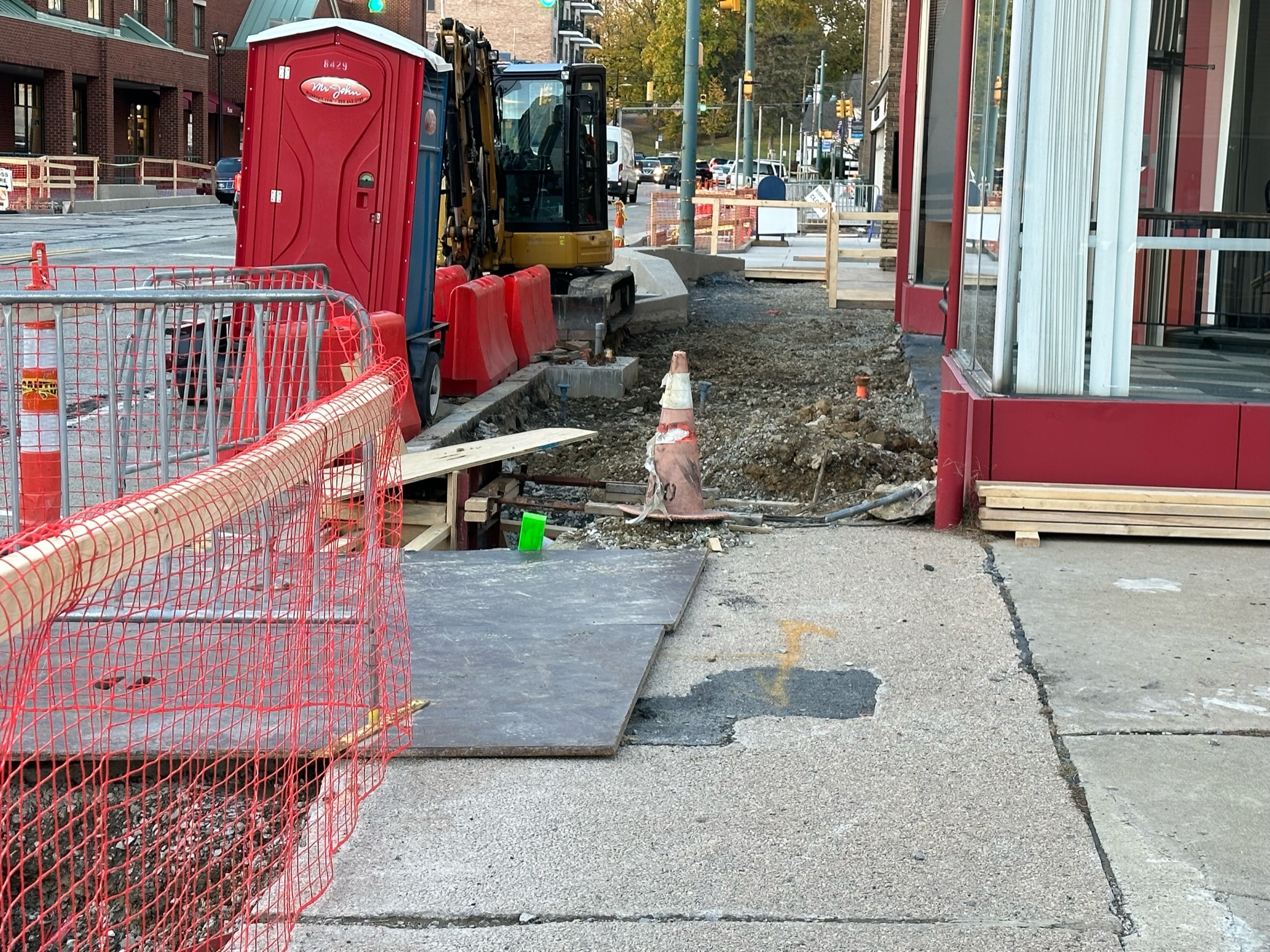
    Last Monday, after the police chief community forum, Commissioner Ranney informed me of a conversation she had with an uptown business owner in which she was asked whether she was aware that a person had fallen on an uptown sidewalk who then later died. Commissioner Ranney had not been aware, nor was I.

    I was not aware, but it didn’t surprise me. The picture above was taken uptown just a few days ago – that is not a stock image. It’s one of the reasons I have sent several emails over the course of several months to our manager, solicitor, commission, and other staff members about my concerns with the vibrant uptown project. I voiced those same concerns at many meetings we’ve had since the project started. To date, those concerns have seemingly been ignored, which is why you are reading about it here.

    Following that conversation with Commissioner Ranney, I sent an email to the municipal manager, municipal solicitor, and the rest of the commission asking for more information about the person who fell and trying to understand why that information had been kept from the commission. To date, those questions have not been answered. Not by the manager, the solicitor, or other members of the commission whom might have known about this incident and kept it secret.

    At the last Commission meeting, it was announced the Pumpkin Patch Parade would continue as regularly scheduled. For those unfamiliar with the route of that parade – it normally starts at the cemetery and continues south on Washington through uptown ending at Mellon Middle School.

    On Wednesday, I took some photos of Washington Road where hundreds (and possibly thousands) of our family members would be standing during a parade. They’re included the link below:

    https://www.icloud.com/sharedalbum/#B0o5nhQSTdRkbP;22627329-D4BF-4702-BD23-64BF49FB64B5

    Since then, I have pleaded with the other commissioners and staff to move the parade away from uptown, or to hold “trunk or treating” in an alternate location; a suggestion our State Representative also made, and smartly so, in my opinion.

    I’ve gone to every Pumpkin Patch Parade we’ve held since moving to Mt Lebanon more than 10 years ago. For several of the last events, I was the person dressed up as McGruff the Crime Dogg giving out high-fives throughout the parade route. It’s an important and fun event for our families and my kids absolutely love it.

    I am not an alarmist. I think those who know me would consider me a reasonable person who searches for practical solutions to the issues we face. No one wants to be the person to cancel such a fun event for the community, but that’s what responsible people do – when they see something amiss they call attention to it. To do otherwise, or to conceal information from elected officials charged with making important decisions about the safety of our community is irresponsible and lacks sound judgement.

    So much goes into this parade, not only from the municipal side of things, but also from the many organizations, nonprofits, and community groups that are making plans and spending money to be in this parade. Waiting until the last minute to cancel this event makes it nearly impossible to execute an alternative, and it might even create a situation where those community groups can’t get refunds on expensive purchases they made for the event, including candy, costumes, floats, and other parade items.

    So, after seeing those images linked above, I have two questions:

    1. Can you get your kids to stand absolutely still during a parade and not play near elevation changes of several feet with nothing in their way but a single piece of yellow caution tape?
    2. While we do not know the root cause of that person’s death or whether it was even related to the fall uptown, why would the manager and other commission members refuse to answer questions about what they knew and when they knew it?

    If you’d like to know more about the questions I’m asking which are currently being withheld – text me at 412-444-8675.

    In the meantime, call your local commissioner and let them know what you think. You can find their contact information on the official Mt Lebanon website under the Meet Your Commissioners heading.

    Perhaps you will get answers to the questions above or others that you might have related to the Vibrant Uptown project and the parade.

  • Selecting a New Chief of Police for Mt Lebanon

    Selecting a New Chief of Police for Mt Lebanon

    The Chief of Police of Mt Lebanon is a position hired by the manager with the advice and consent of the commission. It is an important position as this person directs the police force which includes officers and non-officers like crossing guards and police admin team members.

    There is no timeline with which the municipality must hire a chief of police, but the commission and municipal staff have signaled this is a priority and the plan is to put that person in place as soon as possible. To that end, the municipality put a process in place to recruit and select a chief of police and is using an outside consultant, GovHR, to aid in that effort.

    The process was communicated to the public on several occasions including at commission meetings, in discussion sessions, and on the municipal website. The following links are publicly available at the time of the writing of this article:

    The staffing consultant worked with the commission, municipal staff, resident volunteer board members, and members of the public to get a better understanding of the type of person that would be a good fit for the police chief in our municipality. The consultant was also given information from the various diversity equity and inclusion groups which worked to provide recommendations for police engagement and staffing processes, among other issues.

    They began a national search for qualified candidates shortly after the commission meeting approving the consulting contract. The consultants put the candidates through interviews and tests and then the municipal manager, HR Director, and members of the commission met with those candidates to further narrow the list.

    In September, the municipality arrived at a list of several candidates who were invited to take part in an all-day assessment where they would complete presentations, answer questions, perform mock press conferences, and discuss how they would handle situations they are likely to encounter as chief of police in Mt Lebanon. Commissioners and staff attended that session along with the consultant, GovHR, and a panel of individuals with law enforcement experience who could further advise the commission and manager.

    Two candidates were then chosen from that assessment to speak with members of our community in a forum which occurred in early October. The community forum took place in person at the municipal building and was streamed online. It was attended by members of the public, commission, staff, and leaders of local and regional organizations and community groups. The video of the community forum is embedded below:

    https://www.youtube.com/watch?v=DX4Tc2NaghQ

    Now, it is up to the manager to make the final recommendation to the commission which will then consent to the choice of the manager or, in the case of non-consent, start the process over with new candidates.

    Public comment is now closed on the community forum but you can always speak to your commissioner with additional questions or concerns that you might have.

  • Mt. Lebanon Neighborhoods

    Mt. Lebanon Neighborhoods

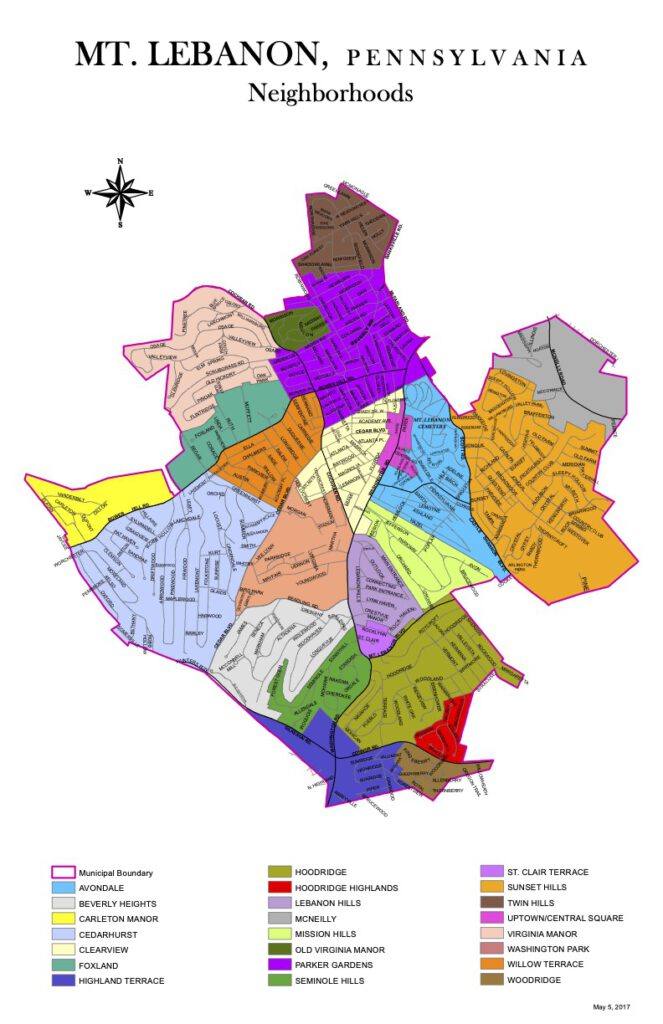
    Mt. Lebanon recognizes 23 distinct neighborhoods, some dating back more than 100 years. We’ve created groups for all 23 neighborhoods, which allows people to join and follow what’s going on in those neighborhoods, and post information too. Groups also allow photo sharing and have unique feeds.

    Each neighborhood has it’s own forum, which means questions can be posted in the neighborhood-specific forum for other neighborhood members to answer and dialogue.

    You can view each of the neighborhoods at the group index page or use the links below to go directly to your neighborhood.

    We don’t have too many images for the neighborhoods yet, but would love to add them. If you belong to one of these neighborhoods and would like to send us an image for us to use as the group cover image or profile image, just join the neighborhood and add an image to the feed. We’ll monitor and grab the good ones for using on the site.

    AVONDALEHOODRIDGE HIGHLANDSSUNSET HILLS
    BEVERLY HEIGHTSLEBANON HILLS TWIN HILLS
    CARLETON MANORMCNEILLYUPTOWN/CENTRAL SQUARE
    CEDARHURSTMISSION HILLSVIRGINIA MANOR
    CLEARVIEWOLD VIRGINIA MANORWASHINGTON PARK
    FOXLANDPARKER GARDENSWILLOW TERRACE
    HIGHLAND TERRACESEMINOLE HILLSWOODRIDGE
    HOODRIDGEST. CLAIR TERRACE

    A neighborhood map image is listed below. You can also view this page directly on the Mt. Lebanon website.

    If you’d like to learn more about the Mt. Lebanon Neighborhoods, checkout the Historical Society’s webpage, which is a wealth of information. You might just learn something new about your very own neighborhood!

  • New FNB Plans Approved by Commission

    New FNB Plans Approved by Commission

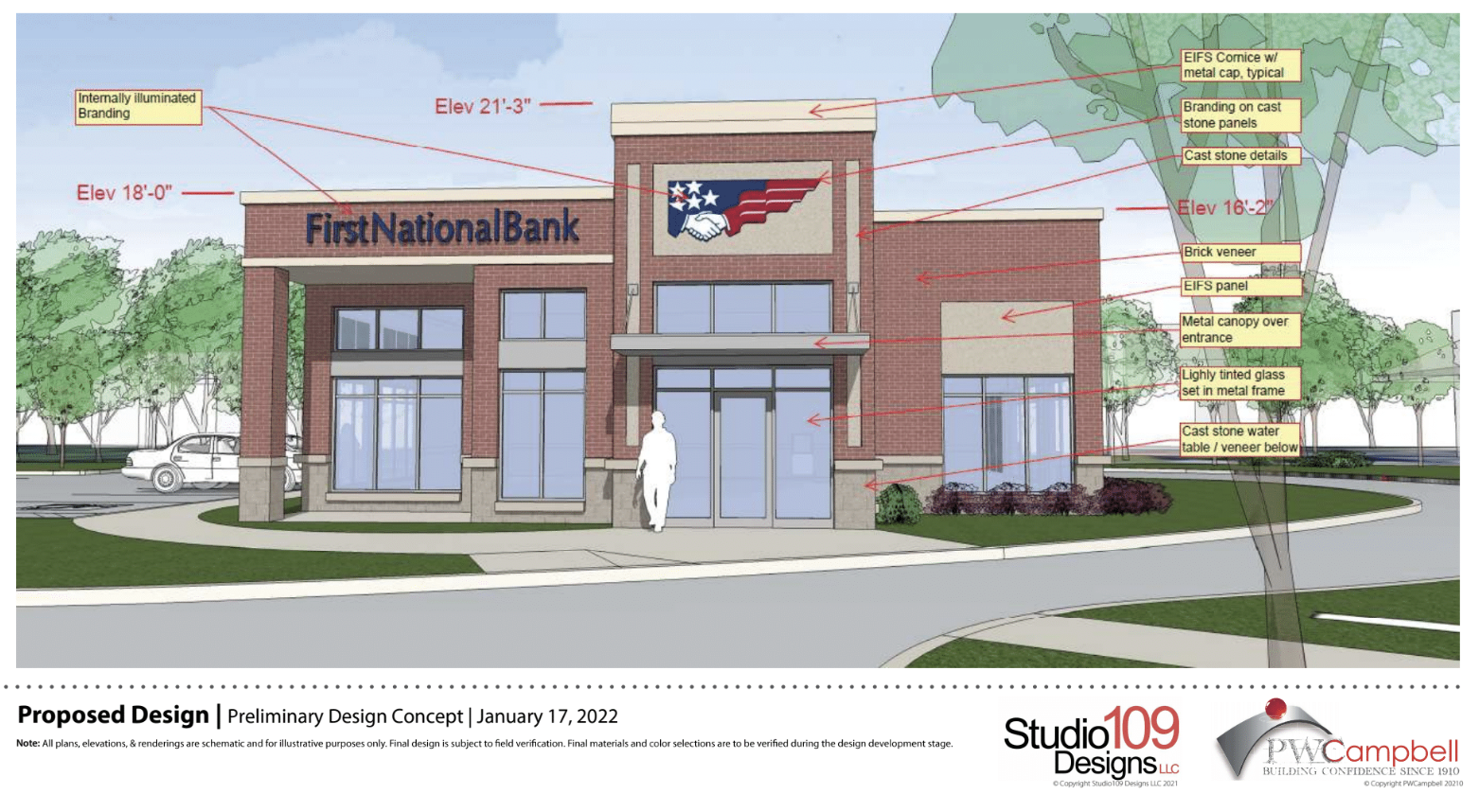
    Last Tuesday, the Mt Lebanon Commission approved the plans for the development of a new FNB Bank to be placed at the location of the existing (and empty) Dollar General store on Cochran Road. I thought it would be a good time to further discuss the development process, this time from the standpoint of our SALDO.

    What is the SALDO?

    SALDO stands for Subdivision and Land Development Ordinance, which are the rules and regulations that makeup how the land can be subdivided and developed within the municipality. The SALDO goes hand-in-hand with our Zoning code and building code, which, together make up all the rules and regulations that govern property development, redevelopment, land usage, and the rules on how buildings can be constructed.

    The Zoning code determines what TYPE of property can be developed or built in any specific area. For example, C-1 is a commercial zone that allows commercial buildings, office space, and other business types. R-1 is single-family residential. R-2 allows multifamily properties, but only of relatively low density. Inside each section of the zoning code, you will find information that further defines the rules and regulations of what can be done in any zone, like whether fences or pools might be allowed, the types of and widths of roads and driveways that are required, etc. The Zoning code is a very versatile document and usually the first stop for any property developer looking to build in Mt Lebanon.

    After a developer consults the Zoning code to see if a specific building type is possible on a particular parcel, they consult the SALDO which sets out design standards and gives developers further information about how that property can be developed and the procedure for turning in documents for the development. For example, the SALDO sets forth rules for Stormwater Conveyance and Management, Sanitary Sewers, Handicapped Accessibility, Landscaping and Screening Standards, Pervious Pavement, and other items. The SALDO sets construction hours between 7:00 am and 7:00 pm Monday through Saturday, all day Sunday and on federally designated holidays. It also sets the required turning radius for cul-de-sacs to allow for emergency vehicles to navigate them properly, and where sidewalks should be provided, if at all.

    The Development Process

    We discuss the overall real estate development process in depth in another article, but the general process goes like this:

    Present Plans to develop a property

    The Planning Commission reviews the submission to make sure that plan follows the zoning code and SALDO. If there are elements of the plan that do not fit the zoning code, the developer can appeal to the Zoning Hearing Board and ask for a variance. If there are elements of the plan that do not fit the SALDO they can ask for a waiver from the Commission.

    There are only 5 reasons to approve a variance, and since this is a quasi-judicial board, those 5 reasons are legal thresholds that must be met. This is the reason so few variances are granted. If the developer (or resident) doesn’t like the decision of the Zoning Hearing Board they can appeal that decision to the Court of Common Pleas in Allegheny County. There have been several appeals of our ZHB decisions in the past 6 years. None of them have succeeded at the county level.

    A developer can ask for a waiver from any of the requirements of the SALDO, and these are reviewed directly by the Commission. And this is where my story picks back up.

    SALDO WAIVERS

    Waivers are not usually requested for single-family developments or smaller commercial properties – because they can be easily developed within the rules of the SALDO. When developers attempt to fit too much on a lot, or save a few dollars on items we require but other neighborhoods don’t, the Commission might see more waiver requests. And that’s what happened with the FNB recently approved.

    Section 704 of the SALDO sets forth rules about sidewalks. Section 704.1 simply states:

    In all subdivisions and land developments, sidewalks shall be installed along the portions of the property abutting a street.

    Section 704.1. Mt Lebanon SALDO

    That means when someone proposes a new development or redevelops an existing property, if they abut a street (public, private, or otherwise designated) a sidewalk, if it does not already exist, must be installed.

    Being a “walking community” you can imagine why this portion of our SALDO is extremely important. Yet sidewalk requirements are not implemented consistently and their application has varied from commission to commission. That’s why we see some roads have them and some roads don’t.

    FNB Requests Sidewalk Waiver

    During the development process, the developers of the new proposed FNB requested a sidewalk waiver for the street abutting their property — the northern property boundary with Ferren Alley. The developers claimed, among other things, that the land coming off the alley was too shallow and too steep such that following the SALDO would cause the developer to expend additional funds to install a sidewalk. To install a sidewalk, they would have likely had to ease the slope coming off the alley, which in turn would have likely required ground fill and potentially a stabilizing wall.

    However, the SALDO does not allow for considerations related to expense, it merely sets forth best practices for building and development. And that’s the way it should be.

    The developer tried to further obfuscate the issue by offering to install extra screening trees to effectively block the view of the building from residents along the alley. In doing so, they shift the conversation from the Municipality requiring safe sidewalk access on all roads to a conversation about residents seeing beautiful trees instead of a monolithic building facade.

    In the end, the Commission voted 4-1 to approve the waiver and allow the development; with one dissenting vote from me. It was my opinion the developer should follow the SALDO and install the sidewalk, even on the abutting alley. Wanting to save a few dollars during development is not a reason to seek waivers from our SALDO.

    Why This Matters

    If you live on a private road, alley, or “paper” street that the municipality does not own, the maintenance of that road falls to the abutting property owners. The municipality may, from time to time, still plow that road in an effort to keep it clear for potential emergency vehicles, but doing so is not the municipality accepting responsibility for that road. Those roads, since they were not required to follow public road standards, seldom have curbs, seldom are made of concrete, and seldom have storm water management. The cheap asphalt gets eroded, mud from the lawn makes it way into the road and down the street, and ice spots often occur here in winter. This is why these roads often fall into disrepair. It’s also the reason for many of the road maintenance complaints we get as commissioners. And for good reason. These types of roads really shouldn’t exist. And even if many of them were created before we had rules governing road development (like we do now), the SALDO works to correct those former deficiencies by requiring new developments to bring the properties up to modern standards.

    Had the developers of the FNB followed the SALDO, they would have been forced to install sidewalks, which forces them to build curbs. Does it cost more to build? Yes, it does. But it brings our roads up to modern standards, provides more sidewalk space, allows for better stormwater flow, and makes our roads and neighborhoods moderately safer, and easier to navigate.

    Some would claim this road is just an alley and there isn’t much traffic and forcing a developer to build a sidewalk there on the back or side edge of a bank is superfluous. The SALDO doesn’t set forth rules for minimal traffic to be met before sidewalks should be installed. It doesn’t set forth rules for the type of street on which sidewalks should be installed. It doesn’t set forth property types that require or don’t require sidewalks. They all do.

    Official Documents

    Official information related to this development can be found on the publicly available municipal website. There, you’ll find building renderings, a development plan, and a timeline of official proceedings.

    Let Me Know Your Opinion

    Drop a comment here on the post and it will show up for others to read here and in the main site activity feed.

  • Why Do We Need Open Lebo?

    Why Do We Need Open Lebo?

    What follows below is the short story behind why openlebo.1wp.site/ is needed, how it got started, and how you can participate.

    Who Is Behind openlebo.1wp.site/?

    This site was started by Craig Grella, a resident and, at the time this site was created, elected Commissioner in Mt. Lebanon’s 4th Ward. What is important to understand is that this site has no official affiliation with the Mt Lebanon Municipality or Mt Lebanon School District. My views, comments, and other content posted here are solely my views and do not reflect the opinions or official workings of the School District or Municipality in any way. Other elected officials may, from time to time, post on this site as well, and when they do that content will be their sole opinion and not the opinion of the bodies they were elected to represent. I’ll explain more on this in just a minute, in the meantime — if you want an official opinion or comment from the municipality or school district on any topic I recommend you visit those official channels:

    Why openlebo.1wp.site/?

    The idea for a site like Open Lebo first came to me in 2019, a little over a year after being elected as Commissioner. There are so many important issues to discuss, and most of them require more than a cursory review — they require deep thought, review from all angles, input from all stakeholders, and comment from fresh eyes. I quickly learned that there was just not enough time to dive into all the important issues facing our community during two commission meetings each month or the discussion sessions that preceded them. With families, sports, dinner time, and the timing of the official meetings — very few residents could take time out of their busy schedules to attend. So more goes unsaid, unnoticed, and unexplained until something blows up (figuratively speaking). 

    I started to think there must be a better way to continue these conversations outside of official channels — to give people the information they needed, in an informal way that didn’t require deliberation or break the rules of public governance. 

    There are a few community groups that popped up on Facebook and other social networks where residents could get together and post interesting stories. But like most networks, those are chronological walls and topics get quickly buried under newer posts. Networks like Facebook are notoriously hard to search, and others, like Twitter, while searchable, quickly lose context when taken out of the chronological order they were designed to encourage. Networks like that also suffer from the same question being asked over and over again – it’s what makes group moderators burn out and leave because on those networks comments and posts can’t be merged into similar topics. They just run again. Get buried. Get asked again. Get buried. Asked again. Buried. It’s a never-ending silly game that the network creators don’t care to solve.

    The fact is, those networks just weren’t built for community conversations. Not to mention they mercilessly track you across the web, sell your data to the highest bidder, and are used mainly now to spread hate and division. In fact, their business models depend on it. See Facebook Whistleblower Frances Haugen’s Senate testimony and the award-winning documentary The Social Dilemma for more on that assertion. It was clear to me that Facebook and most of the other social networks are not the answer. 

    Other team tools like Slack and Discord also don’t work. They lack the sophistication to properly organize community conversations — they too are merely chronological posting walls that focus only on the here and now. 

    I knew that we needed a better way, and probably a better format, to have broad-based community conversations but couldn’t find a tool that would allow me to do it the way I thought it should be done.

    I started to have conversations with other commissioners and school board directors who felt the same way — that there was just never enough time to dig into all the things we needed to discuss. We started to create a framework for a website that would allow members of the public to have the best of what the social networks offer, but also allow for organization required for real community building. I knew we needed the ability to:

    • Post quick status updates so that friends and family can follow you and stay up to date; as you can on Twitter, Reddit, or Facebook.
    • Post questions and get quick answers from the community; like you can on pretty much every social network.
    • Post images, gifs, videos, links, and other media; like Instagram, and also because they’re awesome.
    • Create longer-form articles; as you’d see on news sites and popular blogs.
    • Create and join social groups; like on Facebook, Google, and MeetUp.
    • Send private messages to community members or group messages to an entire group.
    • Make public only the info we wanted public and keep private the info we want to keep private.
    • Prevent our data from being sold to third-parties and advertisers across the world.

    In early 2020, I created the first version of openlebo.1wp.site/ and ran it by the Municipal solicitor to make sure it was providing enough separation from what I was doing as a Commissioner but still allow me and other private residents to continue the public conversation on important issues. Then, just a few months into 2020, the COVID-19 pandemic took center stage, forcing everything else to the back burner.

    Commissioners, school directors, municipal and school staff, and government agencies at every level spent countless hours trying to understand the implications of this new unseen threat, and, more importantly, figuring out ways to keep the public safe. The situation was so fluid, with guidance changing almost hourly for the first few months of the pandemic. Laws were created by our State Legislature, then changed, then changed again. Orders were put in place by our Governor and Health Department, then changed, then changed again. In the meantime, businesses were closing, people were staying home, and the economy teetered on the edge of a cliff.

    As the pandemic worsened, it was clear that certain people in Mt. Lebanon were going to need extra help. I worked with other members of the Commission and municipal staff, and staff and council members from the Borough of Dormont, and State Rep Dan Miller to create a site called Neighborhood Aid, which would take requests for grocery deliveries from those unable to visit stores by themselves. Later, we’d add medicine and pharmacy pickups, and other errands that residents could no longer do while on mandatory stay-at-home orders. In the first few months of the pandemic, we received hundreds of requests all of which were filled by residents who volunteered to shop and make deliveries to those who couldn’t leave their homes. We put a simple, low-tech process in place and the residents and administrators made it all work beautifully. Have a need – call or send an email. Want to volunteer – call or send an email. We brought the two sides together – something the municipality had been unwilling or unable to do in the past.

    I’d worked in community organizing before, and had seen how distributed teams could bring about big changes in an organized fashion. But mostly that model was put to use on political campaigns and political issues. But here, I wanted to make it work with the local government. That inspired me to bring the distributed community model to OpenLebo, which, at the time, was still in development.

    Around the same time, a man named Ahmaud Arbery was shot and killed in Georgia. A woman named Breonna Taylor was killed a few months later, and George Floyd a few months after that. The community response from each of these murders was instant, and with each successive incident, the voice grew stronger and more sustained. Even though these events took place hundreds of miles away, and even though we still found ourselves in the grips of a continued health crisis in the pandemic, we all knew that something needed to change with the way our communities were interacting with our governments.

    Finally, in 2021, the Mt Lebanon Commission set up diversity, equity, and inclusion (DEI) groups working as ad-hoc subcommittees of the community relations board. Four groups were created and their members were tasked with researching how we might become a more diverse, equitable, and inclusive community and then making recommendations to the commission on how we might achieve our ultimate goal. I was honored to be the commission liaison to the DEI Group 3 – which worked closely with the Mt. Lebanon Police Department. That experience taught me three things:

    1. Communication is paramount, and that we must listen more than we speak.
    2. If we want something different than what we have now, we have to do things differently. We have to think differently, act differently, and we cannot settle for the way things have always been done.
    3. To change a culture at its roots you need to act with new principles, new actions, new policies, and new laws across the board and in everything that you do. That means with relationships between people, in how we communicate, how we create and maintain rules, order, laws, how we treat other people, even how we refer to ourselves and others. That spirit has to infuse everything we do.

    With those experiences fresh in my mind, and with the understanding that we can’t just sit by and wait for someone else to solve our issues, I finished the framework for this site and launched it on the interwebs as a resource for everyone in Mt. Lebanon.

    So What Is OpenLebo?

    I have a hypothesis that open communication makes everything better, and openlebo.1wp.site/ is the experiment by which I hope to prove that hypothesis correct.

    openlebo.1wp.site/ is simultaneously a Q&A forum, group platform, social activity feed, and member sharing site — and its goal is to make Mt. Lebanon a more open, transparent, and welcoming place where we can:

    • Share ideas about how we make Mt. Lebanon a better place.
    • Call out harmful habits and situations when we see them — like discriminatory rhetoric and actions. Not to shame those people, or to call them out for being bad, but to help them understand how their actions might be harmful to others and to work with them to end that behavior.
    • Encourage others to be better, more welcoming neighbors to all those who live in, work in, or visit Mt. Lebanon.
    • Inform and communicate with our neighbors about interesting events.
    • Encourage activism and civic participation.
    • Provide a good example of positive communication for students, youth, and the next generation of residents, business owners, and leaders in Mt. Lebanon.
    • Pickup the conversations started by our local governement and school board, dive deeper into them, and expand on all imaginable angles so that all residents can more clearly understand the existing and proposed policies and how they might affect us all in our daily lives.

    And That’s Where You Come In

    Open Lebo can’t succeed in a vacuum. To work, it’s going to require lots of content, some organization, and a ton of community cooperation. In short, it needs as many residents as are willing to participate in this experiment to improve communication between all Mt. Lebanon residents, including those who are here now and those who might be here a few years from now.

    There’s so much this site can become — a job board for local residents looking to start or change careers, a place where those in need can find volunteers to help, a marketplace for the exchange of local goods and services, and community events calendar. It’s all possible, and, as with every journey, it all starts with the first step.

    To get you started, I’ve put together a few helpful articles and video tutorials on how to use the site.

    If you’ve read this far into the longest blog post ever, thank you! Again, I hope you will join me on this journey by reading our rules of the road and then introducing yourself here.

    If you signed up to be a member of this community, you’ve already agreed to the Terms and Privacy Policy. If you haven’t done that yet, I encourage you do read both those pages. They’re important. Also, you should read the User Guidelines which govern how we want people to interact on this site. 

    If you have any other questions post a note in our support forum or send me a note at craig@craiggrella.com or to community admins at info@openlebo.com.

    I hope you enjoy (and participate in) the site!

    Craig Grella